Engine

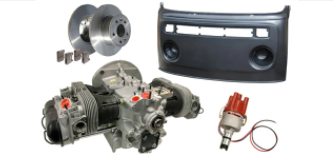
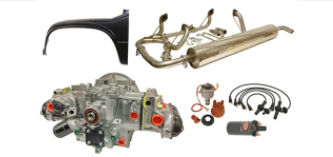
VW Beetle Engines and Engine Parts

The engine is at the heart of every classic VW Beetle, delivering the distinctive driving experience that has made these iconic vehicles so popular. Whether you're carrying out routine maintenance, replacing worn components or undertaking a complete rebuild, using the correct parts is essential for reliability and performance.

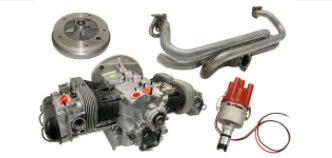
At Just Kampers, we stock a wide range of VW Beetle engine parts for air-cooled engines, including cylinder heads, carburettors, pistons, barrels, gaskets, seals and more.

What Is a VW Type 1 Air-Cooled Engine?

Most classic Beetles are powered by the Type 1 air-cooled flat-four, often called a boxer engine because its pistons move horizontally opposite each other. Unlike modern water-cooled engines, it uses a fan-driven cooling system rather than coolant, radiators or water pumps.

The Type 1 engine was also fitted to other classic Volkswagen models, including the Split Screen and Bay Window Camper, Karmann Ghia, Type 3 and VW Thing. While specifications varied, many components and engineering principles were shared across the air-cooled VW range.

Common VW Beetle Engine Sizes

Volkswagen produced several Beetle engine sizes, with 1200cc, 1300cc, 1500cc and 1600cc being the most common. When sourcing parts, it's important to identify both engine capacity and whether your engine uses single-port or twin-port cylinder heads.

Single-Port vs Twin-Port Cylinder Heads

Single-port heads use one intake port per cylinder head to feed both cylinders on each side of the engine. Found on all 1200cc engines and many earlier 1300cc and 1500cc units, they are known for simplicity, reliability and strong low-speed torque.

Twin-port heads, introduced on later engines, feature separate intake ports for each cylinder, improving airflow, power output and high-speed performance. Components such as intake manifolds, cylinder heads and carburettors often differ between the two designs.

Engine Variants

1200cc (1192cc): Produced from 1954, typically generating 30–34bhp. Known for durability, simplicity and originality.

1300cc: Introduced in 1965, producing around 40–44bhp. Offers improved performance while retaining fuel economy and reliability.

1500cc: Introduced in 1966, delivering approximately 44–53bhp with increased torque and improved cruising ability.

1600cc: Introduced in 1970 and one of the most popular Beetle engines. Later twin-port versions produced around 50–60bhp and remain widely supported with excellent parts availability.

Popular VW Beetle Engine Parts

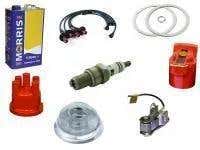
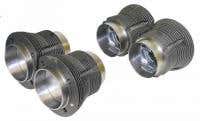
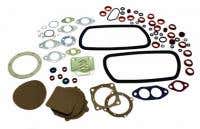
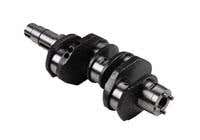
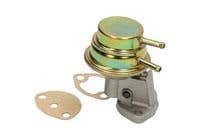
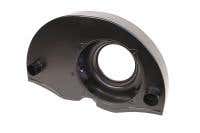
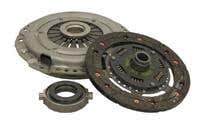
Popular VW Beetle engine parts include:

Choosing the Right Engine Parts

Before ordering, check your Beetle's model year, engine size, engine code and any modifications. Components can vary significantly between production years and engine configurations.

For restorations, original-style replacement parts help maintain factory specifications and authenticity. For improved performance, popular upgrades include larger carburettors, upgraded cylinder heads, ignition systems, exhausts and increased-capacity engine kits.

Quality matters. Engine components operate under constant heat, vibration and stress, so choosing well-manufactured parts can improve reliability, efficiency and longevity. When rebuilding an engine, replacing worn ancillary components at the same time can help prevent future issues.

Need Advice?

Frequently Asked Questions

How do I replace the alternator on a VW Beetle?

Replacing the alternator on a VW Beetle involves the following steps:

  1. Preparation
    • Disconnect the battery to prevent electrical shocks. Ensure the car is parked on a level surface and the parking brake is engaged.
  1. Remove the Belt
    • Loosen the generator/alternator belt by adjusting the tensioner or loosening the pulley bolts. Remove the belt from the alternator pulley.
  1. Disconnect Wiring
    • Label and disconnect the electrical connections on the alternator, including the main power wire and the voltage regulator connection.
  1. Remove the Alternator
    • Unbolt the alternator from its mounting bracket. On some models, you may need to remove the cooling fan or shroud first, as the alternator is often integrated with the fan assembly.
  1. Install the New Alternator
    • Position the new alternator in place, securing it to the mounting bracket. Reattach the fan or shroud if removed earlier.
  1. Reconnect Wiring
    • Reconnect all electrical connections, ensuring they are secure and correctly positioned.
  1. Reinstall the Belt
    • Place the belt back onto the alternator pulley and adjust the tension. The belt should be tight enough to avoid slipping but not overly tight.
  1. Test
    • Reconnect the battery and start the engine to test the new alternator, ensuring it charges the battery correctly.

Visit the Just Kampers Engine page for more information and parts.

How do I replace the fan belt on a VW Beetle?

To replace the fan belt on a classic air-cooled VW Beetle, follow these steps:

  1. Locate the Fan Belt: The fan belt is situated between the crankshaft pulley at the bottom and the generator pulley at the top.
  2. Loosen the Generator Pulley Nut: Use a 21mm spanner to loosen the nut on the generator pulley. Hold the pulley in place with a ‘C’ spanner to prevent it from turning.
  3. Remove Shims: The pulley has shims (thin washers) between its halves. To loosen the belt, remove shims from between the pulley halves and place them on the outside under the nut.
  4. Remove and Replace the Belt: Once the pulley halves are loose, remove the old belt. Replace it with a new belt, ensuring it sits correctly on both the generator and crankshaft pulleys.
  5. Adjust Tension: Add or remove shims to adjust the belt tension. The belt should have about ½ inch of play when pressed in the middle.
  6. Tighten Everything Up: Retighten the generator pulley nut securely. Double-check the belt tension.

For more information and engine parts, visit the Just Kampers VW Beetle Parts page.

Do I need a complete engine gasket set or an individual seal?

 complete engine gasket set is the most practical option when splitting the crankcase for a full rebuild or renewing multiple sealing points at once. If you are fixing a localised oil leak, such as a dripping pushrod tube or leaking rocker cover, an individual gasket or seal set is all you need. Always check the itemised product description, as component inclusion varies between standard seal sets and heavy-duty overhaul kits.

How do I find the correct engine code for my VW Beetle?

Look at the engine crankcase right under the generator/alternator stand pedestal. You will find a 1- or 2-letter prefix followed by a series of numbers stamped into the metal. Use this code (such as AB, AD, or AS) alongside your engine capacity and port style (single-port vs. twin-port) to select the correct gasket kit, as non-original engines are common in classic VWs.

Should I install VW Beetle engine gaskets dry or with sealant?

Most paper, cork, and rubber gaskets, including sump gaskets and valve cover gaskets, should be fitted dry or with a very light film of clean engine oil/grease to allow proper seating. For split-case halves, main gallery plugs, or uneven mating surfaces, use a thin coat of non-hardening engine sealant (such as Curil-T or Permatex). Avoid over-applying liquid sealant, as excess squeezed into the engine can break off and clog oil galleries.

Are VW Beetle engine seals shared with other air-cooled VWs?

Yes. Because Volkswagen used the Type 1 air-cooled engine architecture across multiple vehicles, many gaskets and seals are interchangeable with the T2 Split Screen, T2 Bay Window, Type 3, and Karmann Ghias and Trekkers. Each product listing highlights shared vehicle fitment to help you select the exact part for your build.

Do VW Beetle carburettors fit VW campervans?

Selected carburettors, manifolds, and rebuild components are shared with T2 Splits and 1600cc T2 Bays using single-port or twin-port Type 1 engines. Always confirm your engine code and inlet configuration before ordering, as parts do not automatically fit every campervan setup.

Does a service kit include everything I need for a service?
Not necessarily.

Our service kits bring together a useful selection of service parts for specific engine applications, but the exact contents vary from kit to kit. Check the Bundle Contents on the product page to see exactly what's included. Your VW may also need additional parts depending on its condition, service history or any modifications that have been made over the years. Shop all service kits

Are exchange engines subject to additional conditions?
They can be.

Some replacement, reconditioned or exchange products may have a deposit or surcharge attached to them and may require you to return your old unit. The conditions vary between products, so check the individual listing for the current exchange terms, what's supplied and what needs to be returned.

If you're unsure about any of the exchange conditions, get in touch with the JK team before ordering.