



















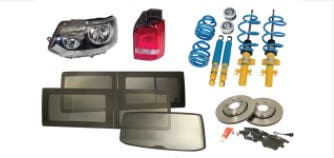










Here’s a list of some of the areas on your VW that you should check over the winter months, and the little fixes that can make a big difference to how much enjoyment you get out of your Volkswagen once the summer arrives again.
We’ve put together a guide to help you keep track of those jobs you’ve been meaning to get around to, and some essential maintenance work, to help you get your vehicle in top shape ahead of next year, and to give you something to do over the winter, when there tends to be less going on.
Josh from the JK Team has assembled this list based on his own experience with classic and modern VWs, as well as official recommendations from Volkswagen themselves.
Table of Contents and Quick Links
Interior Parts to Check and Fix on Your VW
Let's start out by taking a look at the interior of your VW, where things should be warmer and dryer! If your vehicle's interior isn't dryer than it is outside, then that's a pretty immediate concern and you might want to jump ahead to the list of seals to check, or maybe even the drainage points.
I'll assume that your VW isn't leaking internally, though, and we'll take a look at a few easy fixes and things to check in the interior that can make a big difference to how much you enjoy using your Volkswagen.
Since the interior is where we spend most of our time in our Volkswagens, all the parts you interact with the most can become loose and worn over time, so let's take a look at those first.
Steering wheel: Start with what’s right in front of you, and take some time to check the condition of your steering wheel.
Give it a wiggle from side to side to check for play, which is when you can move the steering wheel without the front wheels moving in response. You can expect different amounts of play from different Volkswagens, and if you've got a workshop manual for yours then it's worth checking what's normal for your model.
As a general rule, classic VWs can have about 25mm of play before it's a cause for concern, while you'd expect far less play in a modern VW Transporter - about 10mm to 15mm. You should measure this from the rim, or exterior edge, of your steering wheel, and if you're seeing more than this then it's worth checking that everything from the steering wheel down is all connected and adjusted properly.
The MOT guidelines for steering wheel play note that free play in the steering wheel shouldn’t be more than:
• 13mm for rack and pinion steering systems, or
• 48mm for rack and pinion steering systems if there are several joints between the steering wheel and the rack, and
• 75mm for non-rack and pinion steering systems.
You can also check whether the steering wheel moves ‘front to back’ when you wiggle it, which likely just means that you’ll need to check the coupling or bushes, rather than a more major job involving the steering box.
If your classic VW camper has issues with the steering box, and you need to find out how to replace it, then we've got some guides on how to do this which may be helpful.
Cab door parts: Right, that’s arguably more info than anyone wanted or needed about steering wheels, so let’s move on!
Next, check the cab door handles on both sides, as well as the locks, catches, grab handles, and window winders. All of these parts can become worn as we use them, and older VWs often end up with winder handles which become loose and rattle about, or so stiff that winding the windows up or down becomes a real effort.
Each of these elements are easy to check, repair, or replace, and taking the time to do so can help you remove more of those minor annoyances from your VW and help make it more fun to drive around in.
If you’ve got manual windows and are struggling to wind them up and down, then it’s a good idea to carefully remove your cab door cards to check the mechanisms inside. Is everything in good condition? Have parts become corroded? Have bolts seized or worn smooth? A lot of these are simple fixes using some new bolts or a little WD40 or similar, but they’ll make a big difference.
While you’re poking around inside your cab doors, it’s always a good idea to check the drainage points, make sure that the bottom isn’t rusting, and to take a look at the plastic membrane that helps prevent water from damaging the interior of your cab door.
Floor mats: Take a look at the floor mats, too, and see what sort of shape they’re in. Classic VWs usually have rubber mats which can become worn or start to tear over time. I know I need to repair the floor mats in Jack, the 1956 Oval Beetle that JK owns, as they’ve split where they hook on to the metal studs on the floor, and I just need to find the right size brass eyelets and the tool to press them on.
More modern VWs tend to have carpeted mats which can be more easily removed and cleaned, which is a much easier job. If you find that your floor mats and carpet are often wet, which is hard to avoid during the winter, then it might be worth investing in a moisture trap for your VW.
These are easy to get hold of, and can help minimise the moisture in your vehicle so it’s far less likely that the windscreen fogs up on the inside!
While you’re looking down at foot level, check to see if the kick panels on your VW are cracked and can be repaired - or maybe just cleaned. If you’ve got a classic VW and are feeling really brave you can also take a look and see if you’ve got any wires or cabling hanging down under the dash area which can be tidied away.
Sunvisors: Now take a look up and check your sun visors. Inspect the general condition of the visors themselves, as well as where they clip back into place on your VW’s ceiling and the arm where they can swing over to the side.
Is everything secure? Does the clip still hold the visor in place? Are the screws all tightened properly? If so, great! If not, its usually as simple as screwing them back in, or replacing a couple of screws or a clip. Even replacing the whole thing isn’t exactly challenging, but it’s worth doing.
Your sun visors can be just as important in the winter months as they are in the summer, since the sun is often lower in the sky while a lot of us are driving to and from work.
Gearstick: How’s the gearstick in your VW looking? And how well does it work?
If you’re not happy with the gear shift on your classic VW, then the winter can be a great time to check it over and fix it up, so you can get a more precise gear change. A lot of us are so used to the ‘stirring porridge’ approach to changing gear that we’ve accepted it as normal, but it doesn’t need to be!
Check the gear rod bushings, too, even though the Rear Shift Rod Bushing can be a challenge to get to on some vehicles.
Your modern VW is less likely to have a guesswork-based gear stick, but they can get worn out and tatty. Luckily there’s plenty you can do to spruce it up, or replace it with a new version.
Seat padding and covers: That’s all the major things to check and fix in the cab, at least until we get to the electrical checks, so when you get up, take a moment to check your driver’s seat.
Is the material in need of a repair? Is it time to take the seat cover off and give it a good clean? Can you feel every spring inside the seat every time you sit down? If so, you might need to replace the seat padding!
Here’s a fun fact you probably already knew: although they’re usually referred to as ‘horse hair’, the material in seat padding is actually coconut fibres, which is definitely far easier to get hold of at scale.

Exterior Elements to Check and Fix on Your VW
Moving on to the outside of your VW, there are a whole range of different things to check which may need to be fixed up ready for the new year. I’d recommend doing these checks on a clear, dry day so you can see everything more easily and don’t get absolutely soaked in the process.
Checking for dents: Winter can be a great time to tackle any minor dents or scuffs that your VW has picked up over the summer, especially as you may find it easier to use the ‘hot water trick’ to pull out any minor dents when the weather is colder, too.
Crouch down and take a look along both sides of your VW, as well as the front and back, to check for dents and scratches you might want to tackle. Any damage to the paint work can allow the elements to get at the metal underneath it, and lead to the rust that all classic VW owners dread.
With a bit of searching, you’re likely to find somewhere to get hold of a ‘paint pen’ that matches the colour of your vehicle, so you can touch up any chips or scratches to help keep your metalwork protected and your vehicle looking pristine.
If you’ve got dents you need to tackle, then we’ve filmed a quick video about how to remove dents in your Volkswagen’s bodywork, which you can see below or watch on our YouTube channel.
Video: How to Repair Vehicle Dents at Home
Windscreen wipers: Take a couple of minutes to check over the wiper arms and the wiper blades, and replace any perished or damaged blades as soon as you can.
With so much mud, salt, and general grime being sprayed around while we drive on wintery roads, its both more important and more challenging to keep your windscreen clear during the winter, and you don’t want tired old wipers that turn a splash of mud into a thin smear of grey-brown over your whole windscreen.
Now is also a good time to look at swapping the screenwash in your VW for a low-temperature winter mix, especially if we’re due for extremely cold weather.
Headlights and tail lights: A common complaint about classic and modern VWs is that the headlights can be a bit underwhelming. I’ve certainly found this when I’ve driven one of the work T6s at night and had to double-check that I’ve not had the side lights on by mistake (I hadn’t, the stock lights really are just a bit dim).
This problem is more understandable with classic VWs, which were made before modern headlights which sear themselves into your retinas, but in either case it’s worth checking the lenses on your lights, to make sure they’re not foggy or dirty on the inside.
It’s also a good idea to check that all your bulbs are working, and that you’ve got a supply of spare bulbs in case any of them do go.
There are upgrades available for modern Transporters, and for classic Volkswagens, to help you see and be seen more easily while driving in the dark or in lower visibility, which are definitely worth the investment of time and money.
Bumpers: While you’re at the front and rear of your VW checking the lights, take some time to check the condition of your bumpers, the mounting points, and the seals around them.
Are they cracked or damaged? Are your parking sensors (if any) all working? Does the chrome need some TLC to keep it in best shape? Are they still held on securely? What are the seals like?
If you’re looking for a relatively easy way to totally change the style of your classic VW, then there are some great options available, from 70’s Nerf Bars to Cal-Look T Bars for Beetles and bumper overrider sets for the T2 Bay, through to VW T5 ‘facelift’ upgrade kits.
Chrome: We’ve already checked the chrome on our bumpers, but it’s also a good time to check all of the chrome on the outside of your VW, to see if it needs polishing up and treating. If you’ve got a Cal Look Beetle like Jason from the JK Team, you can more or less skip this bit!
Take a look at your hub caps, chrome mirrors, side trim, grilles, light housings, any chromed window seals, and other chrome accessories you’ve got.
These will often need cleaning to keep them at their best, as they tend to be coated in a relatively thin layer of ‘show chrome’ to make them affordable. It doesn’t take long to check and polish up each bit, and if you do it fairly regularly you can keep them shining for years to come!
Exhaust: You might have already taken a look at your exhaust if you’ve gone around and checked the chrome on your VW, but if not then it’s time to take a look at your exhaust.
Does the backbox need to be removed and cleaned up, or have some dents pulled out of it?
Is the exhaust working properly, or does it need adjusting or re-sealing? How are the heat exchangers looking? Are they actually providing any heat, or are they basically useless?
We’ve covered a few different exhaust-based jobs on our YouTube channel, which you can view there or watch below.
Drainage points: I have saved one of the most important, easiest, and potentially least fun jobs right to the end of this section! You’re welcome!
Winter is a great time to look around your VW at all of the different drainage points, to make sure that each of them is clear, isn’t blocked up, and hasn't become filled with water.
Depending on your vehicle, you’ll have a range of different drainage points which will need checking, some of them more easily accessible than others. You’ll find a full list in your owner’s manual, but here are a few of the common ones to check:
• Headlight bowl drain tubes,
• Front lid spring cavities,
• Base of the A-pillar,
• Door thresholds,
• Hinge pillar access holes,
• Windshield corner drains,
• Quarter window vents,
• Rear floor pan dimple,
• Napoleon's hat / front frame head area,
• Wing and apron rolled edges,
• Sunroof / convertible cavities,
• Engine oil sump plate,
• Roof bar mounting holes,
• Sliding door runner.
Doing this in winter does actually make it easier, as you’ll quickly see if any of them aren’t draining. Once you’ve soaked up any of the water that’s built up in there, you can replace the plug (if that’s what caused the blockage) and then treat the area with Noxudol or similar, to kill any rust which has started there and to seal it to prevent more rust taking root.

What to Check on Your VW's Engine Over the Winter
Moving on to the engine, there are a whole number of easy checks and quick fixes that you can handle yourself, even if you’re not that familiar with anything mechanical.
This is another set of tasks best saved for a dry day, as none of these jobs will be made easier by laying in a puddle…
Coolant & antifreeze: Starting with the easiest job first, if you've got a water-cooled engine you should take the time to check that you've got the correct anti-freeze.
Considering flushing the system through first, if it hasn't been done for a while, to make sure it's all working correctly and hasn't gotten blocked up.
Video: Which is the right anti-freeze for your VW?
Heater channels & boxes: We touched on this earlier when talking about the exhaust, but if you’ve got a classic VW then it’s a good idea to fix up your heater system, as it’s actually really effective when it’s all working as it should be.
If you can get to them easily and safely, then inspect and clean the heat exchangers, heater cables, and flapper boxes so you actually get warm air in the cabin.
Obviously this is less of a concern if you’ve fitted J tubes, but a lot of people are surprised at how good the original heating system is on a classic VW - especially in a Beetle or other air-cooled car, where the heater isn’t trying to warm up such a large area inside the vehicle!
Getting your heating working can make it a lot more enjoyable to take your classic out for a spin on those crisp dry days through the winter, and mean you don’t need quite as many layers when you head to winter events like the Brooklands New Years Day meet.
Oil change: If you’ve not done this for a while, it’s a good idea to drain the engine oil and replace it with the correct oil for your engine, and for the weather. Which oil is right for your VW? If you’ve got an air-cooled engine, then I’ve got a whole article about exactly that - How to Get the Right Air-Cooled Engine Oil.
A 10W is ideal for even the coldest winters in the UK, as it’s rated to about -25°C and the coldest temperature recorded in the UK in 2025 was just above -19ºC.
20W oils are rated to around -10ºC, and should also be fine for most winter driving, especially as relatively few of us are having to drive in locations and conditions where -10ºC weather is the norm!
Video: How to Change the Gearbox Oil on Your VW T25
Engine servicing and tune-ups: If you’re looking for something to do while you’re waiting for the oil to drain, then you can give the engine a good check over and a service. This tends to be easier to do on classic VWs than modern ones, as everything is mechanically simpler and easier to get to, but you can absolutely service your modern Transporter at home.
There are a whole range of different things to check here, depending on the model of your VW and the engine it’s running. Your owners manual will have a section dedicated to keeping the engine running smoothly, but here’s a list of things to check:
• Valves,
• Timings,
• Spark plugs,
• Points,
• Coil,
• Belts and tensioners
• Filters,
• Pumps,
• Points and condenser,
• Distributor cap,
• Rotor arms,
• Cables.
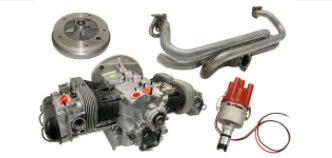
We offer bundle kits which will get you all the parts you need to service your VW’s engine with one click. There are different kits available depending on which engine you’ve got, and any parts you don’t use become spares that you can hold on to until you do need them!
Here’s a video we did about our service kits which I appear in, so you can see that I’m a real person!

Servicing & Fixing Your VW's Brakes
The brakes on your VW are especially important during the winter, when poor road conditions generally mean that it takes longer to slow or stop your vehicle. Luckily, it's relatively easy to inspect, repair, or even upgrade the brakes on your Volkswagen.
Rather than write about every possible combination of brake system and vehicle model, I'll recommend checking your owners guide and/or workshop manual to see what you should be checking, how often different components need to be serviced, and how to go about doing the work.
We've also got a range of different videos which cover how to do all sorts of different jobs on your vehicle's brakes, which you can find on our YouTube channel.

What to Check on Your VW's Body This Winter
Some of these could have been grouped together with the exterior checks, but are a bit more involved - and that section was already long enough!
Rubber seals: Go around your vehicle and take a look at all of the seals that you can see from the outside. Ensure they’re all in good condition, aren’t leaking, and don’t need to be replaced. You may have already spotted any seals which are getting worn or cracked while going through some of the previous checks, but it's always best to take some time to specifically check them over.
There's a lot of them, but some of the most likely to become worn or perished inclide:
• Windscreen seals and wiper spindle seals,
• Wing mirror seals / gaskets,
• Bonnet seals and wing beading,
• Bumper mounting seals,
• Cab door and handle seals,
• Cab step seals and rubbers,
• Sliding door and handle seals,
• Cab window and quarterlight windows,
• Side and rear windows,
• Tailgate or rear doors,
• Engine bay,
• pop top roof seals,
• Headlight seals, indicators, tail lights, side lights,
• Fuel flap seal and bump grommets,
• Westfalia roof and window seals.
Remember, it should take a couple of attempts to slam the door on a classic VW, as they’re basically air-tight when all the seals are working right!
Undersealing & rust repair: While it's generally easier to do in the summer, you absolutely can protect your vehicle with underseal and rust-proofing during the winter months.
Once you're happy that your vehicle is free of any serious rust, then you can start the rust proofing process by giving the underside of your vehicle a really thorough wash, letting it dry, and then applying fresh underseal or rust proofing.
In terms of which type of rust proofing, underseal, or cavity wax to use, then Ankor Wax from Morris has been popular for years, and you can read our blog about using Noxudol here.
Although it can sound a bit daunting, the process itself is easy enough and you can see me (and my kids) in a video we shot about applying underseal a few years ago.
Video: How To Prevent Rust on Your Classic with Cavity Wax

Electrical
Owners of modern VWs are relatively unlikely to have any serious issues with their vehicle's electrical system, other than maybe a bulb or two, although those of us with a classic Volkswagen probably have a list of different electrical bits need to be fixed or checked over!
Ignition: If you've been having problems with your ignition system, now can be a good time to thoroughly check it over to see if you can trace the problem to a loose connection or a component that needs to be replaced.
An electronic ignition can make a big difference to how easily your classic VW starts, and how reliably it runs, in the cold.
Lighting: If you've been following the whole of this guide, then you've probably already checked your lights over, but if not then make sure all your bulbs are still working, the connections are all secure and not corroded, and that the wiring is in good shape. You should also check that the switches in your interior are all working right, and haven't become so worn that they've become unreliable.
As we already covered above, a lot of VW owners find that their headlights are too dim. You can read more about that here, and see what you can do to improve the head lights.
Battery: Take a look at how long ago your vehicle's battery was manufactured, and whether you think it might be nearing the end of its life cycle.
You should also take a look at the battery cables to make sure they're not worn or frayed, and the condition of the battery tray, which can become corroded by battery acid or spray from the road, depending on where the battery is located.

General Maintenance Jobs for Your VW
Here are a few of the more general jobs you can tackle on your Volkswagen over the winter, which you'll be grateful for when Spring arrives!
Build a breakdown safety kit: If you’re looking for something to do in the warm, then you can put together a breakdown kit for your vehicle, to stash away somewhere in your VW.
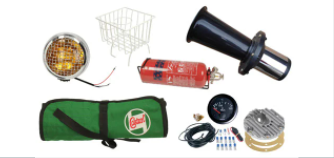
Get yourself a bag (like this round duffel bag in our Oval) and fill it with common spare parts, the tools you’d need to fit them, and essential safety gear like warning triangles, high-vis vests, a torch and batteries, and anything else you might need.
This can be tucked away in your vehicle’s interior, or under the bonnet in your air-cooled car, and be a massive help if you ever run into mechanical trouble while you’re on the road.
Moisture traps: As I mentioned earlier, sticking a moisture trap in your VW can help in absorbing any condensation and, well, moisture that are in your vehicle, which can then stop your windows from fogging up inside, or even icing over inside.
They're affordable, easy to use, and just need to be checked and emptied occassionally so they can keep working effectively.
External thermo mats: Treat yourself to a set of external thermo mats, which can help keep the heat in and prevent the snow and ice from forming on your windscreen and cab windows, so you don’t need to scrape them in the mornings!
A set of external thermo mats can also help insulate the interior of your camper, which can be a great help if you're driving your van to work or are enjoying the quiet and savings of off-season camping.


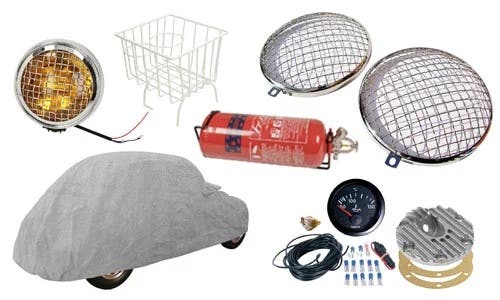
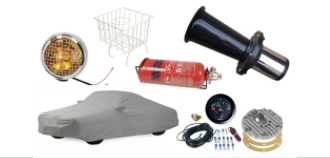
Use a breathable vehicle cover: You can also protect your paint and bodywork from frost, rain, and the elements in general by using a tailored, breathable vehicle cover.
These fit over the vehicle quickly and easily, and can be secured in place with the straps which run underneath. The luxury versions have zips over the doors so you can easily access the interior without needing to remove the whole cover, which can help you get fresh air into your vehicle and tackle any moisture which might have built up in there.


Create a European travel kit: If you’re feeling especially prepared, you can put together a kit with all of the essentials you’ll need for driving your VW in mainland Europe, or a cool road trip overseas.
Things like a warning triangle, high vis jackets, spare light bulbs, beam converters, a UK sticker, and a first aid kit can all be required for driving in the EU, and you'll need to check exactly what's required for the countries you'll be driving through and in.